Well Water · Private Supply
Well water, made trustworthy.
If you draw from a private well in SWFL, no agency tests your water on a schedule, no utility maintains it, and no inspector will warn you when something shifts. The complete responsibility for what comes out of your tap sits with the homeowner. We take that responsibility off your hands.

Chapter I · The Problem
Six failure modes, often present simultaneously.
Florida well water exhibits a predictable set of failures determined by geology, drilling depth, and surrounding land use. A well that tests clean in 2019 can carry iron, sulfur, and bacteria by 2024. We treat the full envelope, not the test from the day the well was drilled.
01Iron
0.3 – 8.0 ppm commonDissolved (Fe²⁺) and oxidized (Fe³⁺) iron from limestone and sandstone aquifers.
Orange staining on fixtures, laundry, and concrete. Metallic taste. Plugs irrigation heads and water heaters.
02Hydrogen Sulfide
0.1 – 3.0 ppm typicalGas produced by sulfate-reducing bacteria in deep wells.
Rotten-egg smell, particularly noticeable in hot water. Corrodes copper plumbing and silver. Tarnishes brass.
03Hardness
200 – 500 ppmCalcium and magnesium dissolved from aquifer rock.
Scale, soap scum, cuts appliance life. Often more severe than city water hardness.
04Tannins
0.5 – 4.0 ppmOrganic acids from decaying vegetation in shallow wells.
Yellow-brown tint in water, mild musty smell, stains laundry pale yellow.
05Bacteria (Coliform, E. coli)
Should be: zeroSurface contamination from septic systems, agricultural runoff, or compromised wellheads.
Gastrointestinal illness; particularly concerning in shallow wells after heavy rain.
06Nitrates
0 – 20 ppm in vulnerable wellsFrom fertilizer, septic, and animal operations.
Especially dangerous to infants; blocks oxygen transport in the blood.
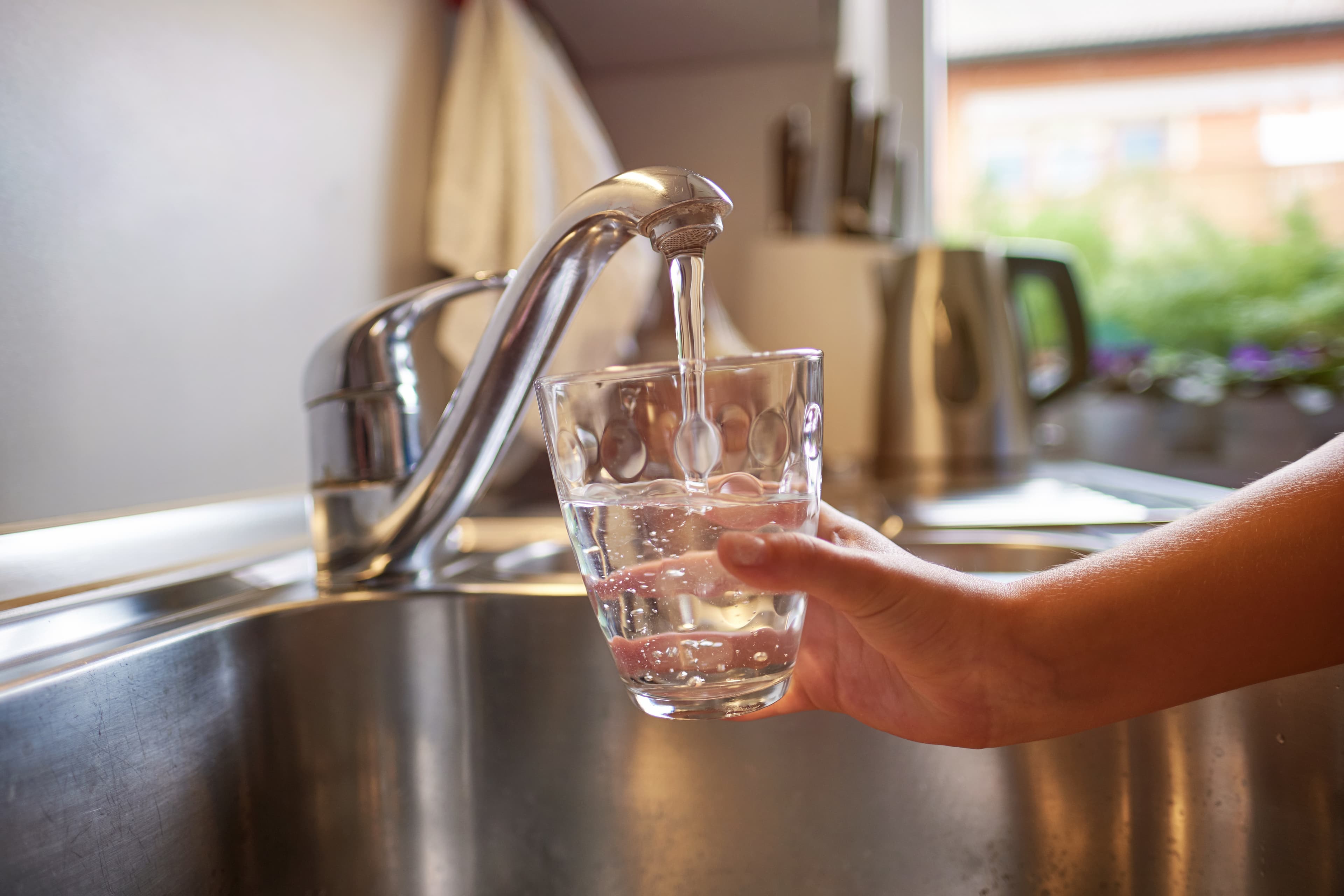
Plate I · Before
Chapter II · Diagnostics
Twelve-parameter test before we propose anything.
Every Intiwater well install begins with a comprehensive panel — not the five-test we use for city water, but a twelve-parameter analysis that establishes the full treatment requirement. We pull samples from the wellhead, the pressure tank, and the kitchen tap separately. The differences tell us where the failure is occurring.
- 01
Iron (total & dissolved)
Both states require different oxidation strategy.
- 02
Hydrogen Sulfide
Confirmed by smell and dissolved measurement.
- 03
Hardness
Grains per gallon, sized for capacity.
- 04
pH
Drives oxidation rate; below 7 requires neutralizer.
- 05
Bacteria (total coliform, E. coli)
Sent to certified lab; results in 48 hours.
- 06
Nitrates / Nitrites
Particularly for wells near agriculture or septic.
- 07
Tannins
Determines if anion exchange or carbon polish is needed.
- 08
Turbidity / Sediment
Sets prefilter sizing and frequency.
“We had given up on the well — were genuinely considering municipal hookup just to escape the smell. Calvin's system fixed it the same week.”
Chapter III · The System
The Intiwater Well Treatment Train.
Wells are never one-size. The number of stages depends on what your test reveals. The architecture below is the most common configuration for SWFL wells with iron, sulfur, hardness, and aesthetic correction.
- IAir injection chamber
Aeration & Oxidation
Oxidizes dissolved iron (Fe²⁺ → Fe³⁺) and sulfide into precipitates the filter can capture.
- IICatalytic media (Centaur / Filox)
Catalytic Iron & Sulfur
Filters the oxidized iron and sulfur precipitates. Backwashes automatically.
- IIIAnion exchange resin
Tannin Removal (if applicable)
Removes organic color and musty smell from shallow wells.
- IVKation resin
Softening
Exchanges calcium and magnesium for sodium. Protects all downstream fixtures and appliances.
- VSterilight UV chamber
UV Disinfection
Sterilizes any remaining bacteria, viruses, and protozoa with 254nm UV light. No chemicals added.
- VIActivated carbon
Carbon Polishing
Final taste and odor polish before water enters the home plumbing.
- VII7-stage RO at kitchen
Point-of-Use RO (optional)
For drinking and cooking water that exceeds bottled-water quality.

Plate II · The Installation
Installed in one day · SWFL
Specifications
Engineered to measurable tolerances.
Measurable · Tested at the tap
Chapter IV · Outcomes
Well water that performs like premium city water — and tastes better.
Iron staining disappears, the rotten-egg smell is gone the day of install, and the family stops dreading visitors using the guest bath.
- 01
No more orange stains.
Fixtures, laundry, concrete, and irrigation heads stay clean.
- 02
Sulfur smell, eliminated.
Hot showers stop smelling like a swamp. Coffee tastes like coffee.
- 03
Bacteria-safe at every tap.
UV disinfection runs 24/7 with no chemistry — your water is safer than most city supplies.
- 04
Appliance lifespan, restored.
Water heaters, dishwashers, washers, and ice makers stop failing at half their expected life.
- 05
Property value, protected.
Buyers test wells. A documented Intiwater system with a transferable 15-year warranty is a measurable selling point.

Plate III · After
Questions
What homeowners ask before they decide.
- My well tested fine when we drilled it ten years ago. Do I need to retest?
- Yes — annually for bacteria, and any time you notice a smell, color, or taste change. Aquifer chemistry shifts with rainfall patterns, neighboring land use, and seasonal water table movement. We include a full twelve-parameter retest with every service visit.
- Do I need a softener if I have iron and sulfur problems?
- Usually yes. Most SWFL wells are also hard, and softening the water protects the more expensive iron and sulfur media from premature failure. We size and stage based on your test, not on assumption.
- What about bacteria?
- Our UV disinfection stage handles bacterial, viral, and protozoan contamination with 99.99% inactivation. No chlorine added, no taste change, runs silently.
- Will this work if my well pressure is low?
- Yes. We verify your pressure tank's setpoint and bladder integrity at install. If pressure is insufficient, we recommend a constant-pressure pump system — often the simpler fix.
- How often does it need service?
- Annual filter inspection and UV bulb replacement. Media beds are backwashed automatically by the control valve. We schedule the annual visit; you don't have to track it.
The decision