Hardness · Iron · Sulfur
Hard water, iron, and sulfur — resolved together.
These three problems rarely appear alone. In SWFL, a home with one almost always has the others, and treating them in isolation produces incomplete results — a softener fails prematurely if iron is not handled upstream, an iron filter cannot work if pH is wrong, and sulfur passes through both unless oxidized first. We engineer them as one system.

Chapter I · The Problem
Three problems, one chemistry.
Hardness, iron, and sulfur are governed by the same aquifer chemistry — pH, oxidation state, and mineral saturation. Treating them as separate failures is how most installers fail. We treat them as a single problem with a sequenced solution.
01Hardness (Ca²⁺ + Mg²⁺)
180 – 600 ppmDissolved calcium and magnesium from limestone aquifer rock.
Scale on fixtures, soap scum, dry skin, brittle hair, dishwasher streaks, water heater scale, premature appliance failure.
02Iron, Ferrous (Fe²⁺)
0.3 – 5.0 ppmDissolved iron in low-oxygen well water; clear at the tap.
Turns orange after exposure to air. Stains everything — laundry, sinks, concrete driveways from irrigation overspray.
03Iron, Ferric (Fe³⁺)
VariableAlready-oxidized iron particulate, visible as orange floc in the water.
Plugs aerators, sediment filters, and irrigation drip emitters; settles in low-flow plumbing as sludge.
04Hydrogen Sulfide
0.1 – 4.0 ppmGas produced by sulfate-reducing bacteria in well water.
Rotten-egg smell, especially in hot water. Tarnishes silver, corrodes copper plumbing.
05Manganese
Trace – 1.0 ppmOften co-occurs with iron in SWFL wells.
Black staining instead of orange; particularly noticeable in toilet tanks and on white surfaces.
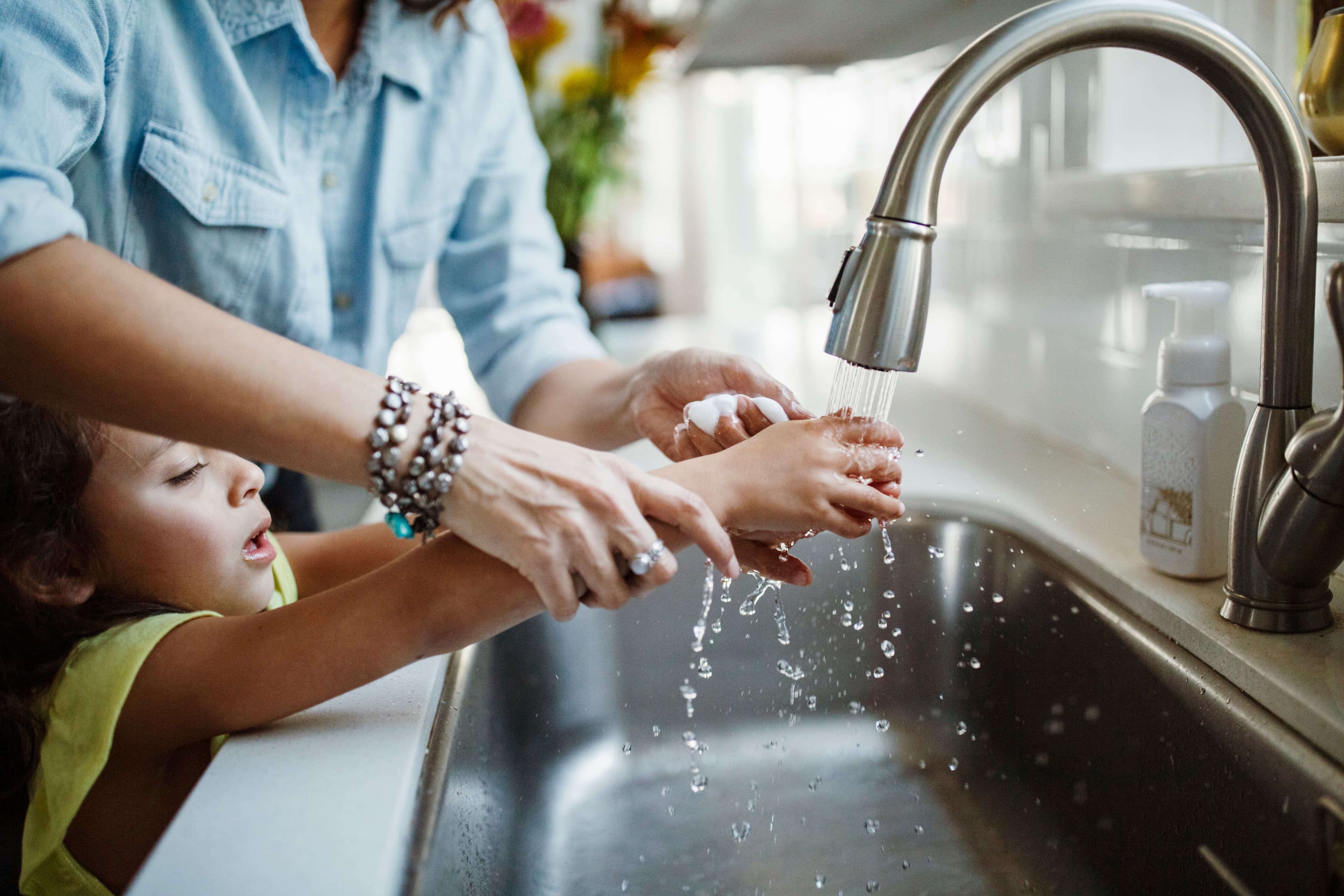
Plate I · Before
Chapter II · Diagnostics
Order of operations matters more than the equipment itself.
The single most common mistake we correct on rip-and-replace jobs: a softener installed in front of an iron filter. The result is a softener that fails inside a year. We test pH first, then iron speciation, then hardness, then sulfide — in that order — because each result determines the next stage.
- 01
pH
Below 7.0 requires a calcite neutralizer before iron media will catalyze.
- 02
Iron speciation
Ferrous vs ferric determines whether aeration is needed.
- 03
Sulfide concentration
Determines aeration tank sizing or chemical oxidation choice.
- 04
Hardness
Sets softener capacity and regeneration frequency.
- 05
Manganese
Co-treats with iron in the same media bed.
“The orange stains were everywhere. We had repainted concrete twice. After Calvin's install, our laundry came back white the next wash.”
Chapter III · The System
The Intiwater Combination Treatment.
A three- or four-stage system that handles the three problems in their required order. We never install hardware out of sequence, and we never skip the test that determines the sequence.
- ICalcite + Corosex
pH Neutralization (if needed)
Raises pH above 7.0 so the iron media can catalyze oxidation. Skipped if your water already runs neutral or alkaline.
- IIAir injection vortex chamber
Aeration & Oxidation
Oxidizes ferrous iron to ferric, and sulfide gas to elemental sulfur — both filterable solids. No chlorine, no chemistry.
- IIIFilox / Centaur catalytic media
Catalytic Filtration
Captures the oxidized iron and sulfur precipitates. Self-regenerates with weekly backwash, no salt required for this stage.
- IVKation resin
Ion Exchange Softening
Removes the hardness — calcium and magnesium — by ion exchange. Now protected from iron and sulfur by the upstream stages.
Plate II · The Installation
Installed in one day · SWFL
Specifications
Engineered to measurable tolerances.
Measurable · Tested at the tap
Chapter IV · Outcomes
The full reset.
Orange stains stop appearing. The smell vanishes. Soap works again. Appliances stop failing.
- 01
Stains stop within the first wash cycle.
Laundry returns to white. Toilet bowls and sinks stop developing the orange waterline.
- 02
The rotten-egg smell, gone.
Showers, hot water at the kitchen, and the laundry room all stop smelling like sulfur the same day we commission the system.
- 03
Appliance lifespan, restored.
Water heaters, dishwashers, and washing machines run their full design life — often 2× what they were achieving on raw well water.
- 04
Soap and detergent use drops.
Typical household reduces dish soap, body wash, and laundry detergent by 30–40%.
- 05
Irrigation comes back online.
Drip emitters and spray heads stop clogging with iron precipitate. No more orange driveways from overspray.
Plate III · After
Questions
What homeowners ask before they decide.
- Will a single softener fix all three problems?
- No. A softener handles hardness; it will fail prematurely on water with iron above 0.3 ppm, and it does nothing for sulfur. Anyone selling you a single softener for combination water is setting you up for a warranty claim. We size the full treatment train.
- Do I need to add chemicals?
- No. Our preferred approach uses air injection for oxidation — no chlorine, no peroxide, no potassium permanganate. The system is mechanical, not chemical, and requires no consumable chemistry beyond softener salt.
- How much salt does the system use?
- Approximately 40 lbs per month for a typical SWFL family home, regenerating on demand or on a meter trigger. We deliver salt on a subscription if you prefer not to handle it.
- How long until I see results?
- Iron staining and sulfur smell are gone the day of install. Hardness scale takes 1–3 weeks to fully clear from your plumbing and water heater. Soap performance and skin changes are noticeable in the first week.
- What if my problems come back over time?
- They won't if the system is maintained. We service the unit annually — backwash valve check, salt replenishment, brine tank cleaning, media inspection. Aquifer chemistry shifts very slowly; once you're treated, you stay treated.
The decision